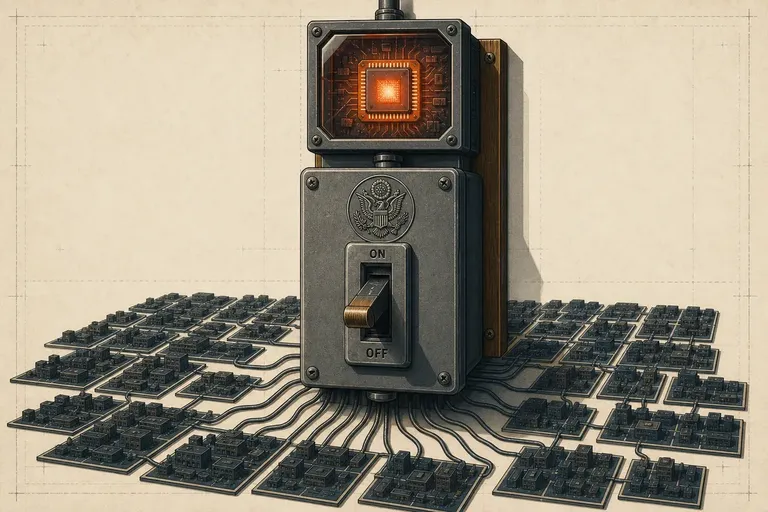
It Looks Like AI and Capitalism Are Fundamentally Incompatible

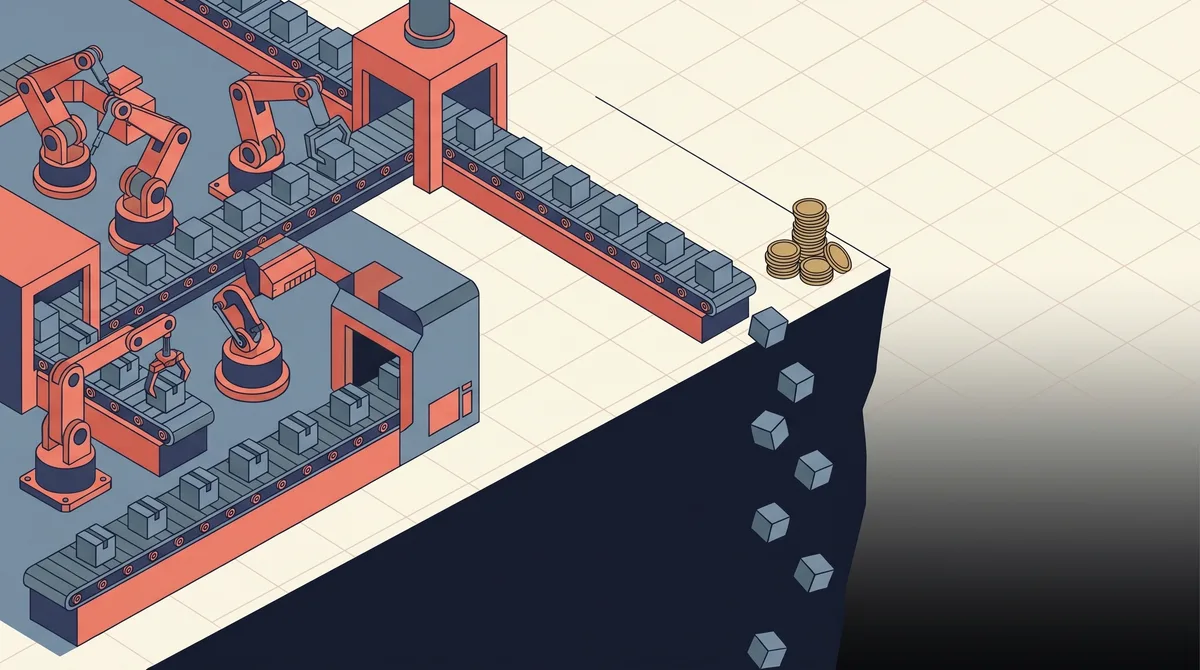
I haven’t written code myself in almost a year.
That’s not a flex. It’s a data point. Claude Code handles most of the implementation work now. I still make the architectural decisions, review what it produces, and course-correct when it goes off the rails. But the day-to-day typing is increasingly not my job.
And I’m not unique. I co-founded an AI company. Every month, I talk to more developers who describe the same shift. Across the industry, AI is eating into work that used to require human hands and human hours.
The standard narrative says this is fine. Technology always displaces jobs, and new ones emerge. Industrial revolution. Electricity. Computers. We’ve been here before.
I’ve been thinking about this a lot, and I’m not sure that narrative holds up anymore. When you actually follow the logic of AI-driven automation to its conclusion, you end up somewhere uncomfortable: a place where AI and capitalism might not be able to coexist.
The “Good Enough” Threshold
Most AI discourse misses a basic point.
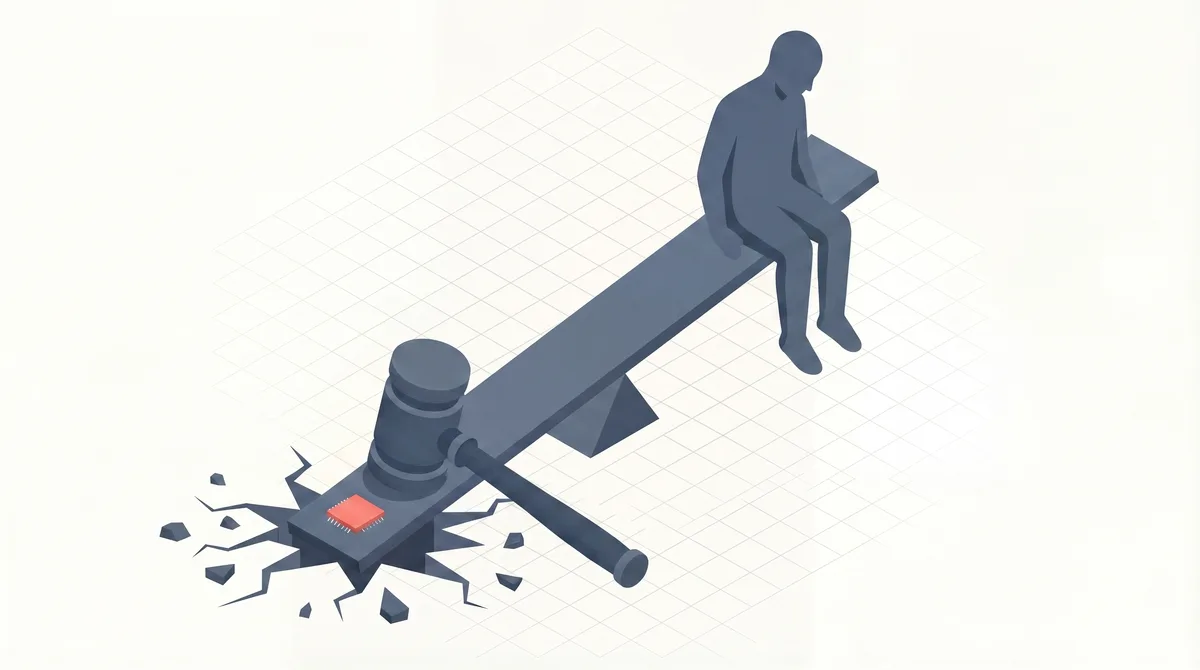
AI doesn’t need to be better than humans. It just needs to be good enough and way cheaper.
That’s a much lower bar than people realize. And the uncomfortable part is that the people making adoption decisions (executives, shareholders, procurement) often can’t tell the difference between “good enough” and “great.” They’re not designers. They’re not engineers. They see output that looks polished and costs a fraction of the headcount, and they approve the purchase order.
Displacement isn’t gated by capability. It’s gated by perception. And perception, in many industries, is already there.
As of early 2026, a product owner still can’t “vibe code” quality enterprise software. That’s where experienced architects come in. But the trajectory is clear, even if the timeline is not. Every quarter, the “good enough” threshold rises.
Record Profits, Mass Layoffs
Here’s the part I keep getting stuck on.
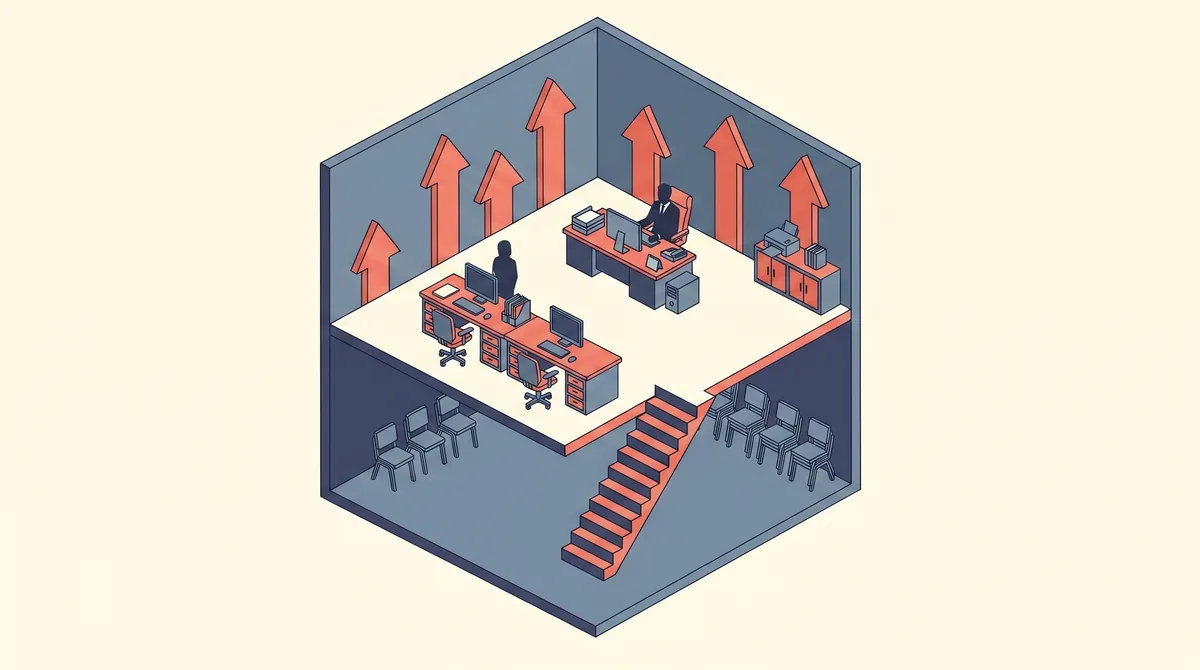
Strong earnings and mass layoffs are happening at the same companies, at the same time.
Through 2024 and 2025, major tech employers announced headcount reductions in the tens of thousands while posting record revenue. Microsoft, Amazon, Meta, Intel, Google. Healthy firms. Record quarters. Still cutting staff.
In past downturns, layoffs tracked distress. In this cycle, layoffs track margin expansion. The productivity gains from AI aren’t translating into more jobs. They’re translating into higher margins for the same output at lower headcount.
That’s the whole point. That’s what the technology is for, from the employer’s side of the table.
The Reinstatement Problem
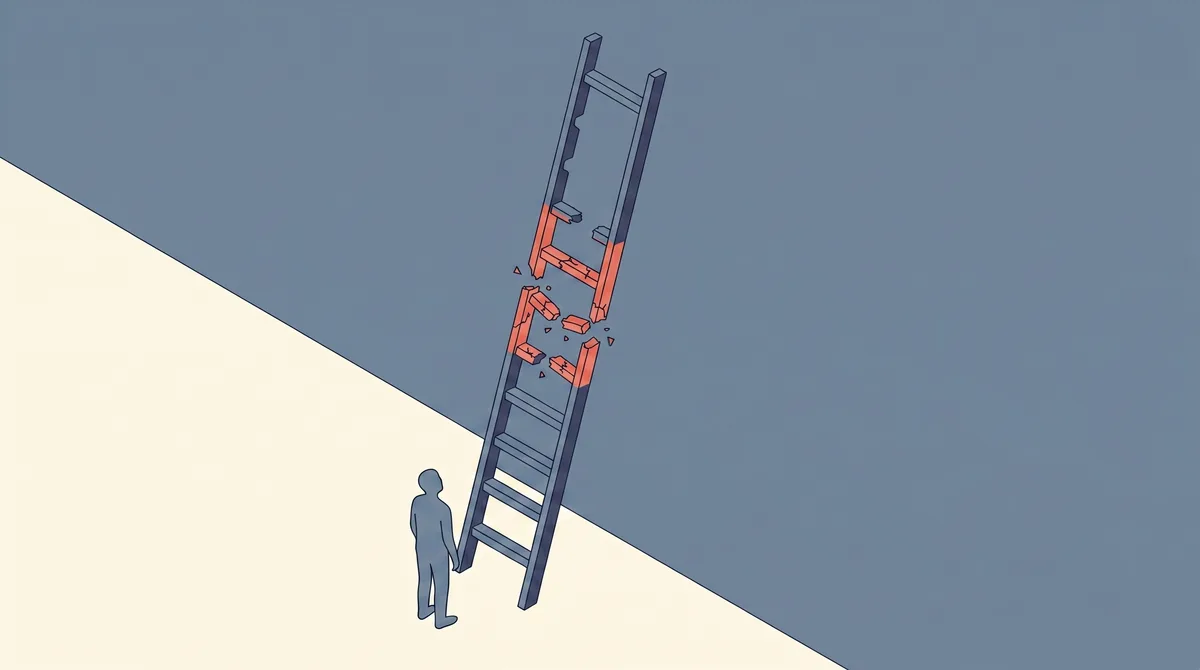
The optimistic response is always the same: “New jobs will be created.”
Economists call this the “reinstatement effect.” Automation displaces workers, but new tasks emerge that restore labor demand. Historically, it worked. A huge share of jobs that exist today didn’t exist in 1940.
But the mechanism is weakening. Nobel laureate Daron Acemoglu and Pascual Restrepo have shown that the slower growth of US employment over the last three decades comes from faster displacement and weaker reinstatement than earlier postwar decades delivered. New-task creation in the sectors most exposed to automation slowed markedly. Their follow-up work pins a large share of US wage stagnation and inequality on the same dynamic.
That’s before generative AI even hit.
When I push on the “new jobs” argument, the optimist usually pivots to projections. The World Economic Forum’s 2025 Future of Jobs Report forecasts tens of millions of new jobs alongside tens of millions displaced. The framing is useful. But when you ask “which jobs, specifically?”, the honest answer is “jobs we can’t describe yet.”
That’s not analysis. That’s faith.
Where Do Knowledge Workers Go?
Here’s what makes this wave different.
Previous automation targeted routine physical and clerical work. Displaced workers moved to cognitive and service work. The assembly line worker became a customer service rep. The typist became an analyst. Each wave pushed people up a skill ladder.
AI targets the cognitive work itself. The analyst. The paralegal. The junior developer. The copywriter. The customer service rep. The same roles that absorbed displaced workers last time.
So where does this wave push people?
The honest answer is we don’t really know. Some of the optimistic framing points to roles that need physical presence, dexterity, or real human judgment. Those exist, but they’re not infinite, and they don’t scale with the number of displaced knowledge workers. Other framings point to roles that involve managing, orchestrating, or verifying AI output. Those exist too. But they’re leverage roles. One architect oversees the work of what used to be ten developers. You don’t absorb ten displaced developers by creating one architect job.
The IMF estimated in January 2024 that roughly 40% of global employment is exposed to AI, rising to around 60% in advanced economies. That’s not a prediction of mass unemployment. It’s a measurement of how much of current work is potentially reshapable. But the direction of reshaping matters. If most of it is substitution rather than complement, the labor market has a very serious problem on its hands.
The Consumer Demand Paradox
This is the part that makes me think we’re not just looking at a labor-market story.
Keep optimizing. Keep replacing workers with AI. Eventually replace middle managers too. Eventually replace executives. Follow the logic all the way to the end.
What are you left with?
Only the owners of capital have income. So who buys the products the AI is producing?
Capitalism requires consumers. Workers are consumers. Eliminate workers through automation and you eliminate the consumer base that generates demand. The whole engine stalls.
Economists call this underconsumption: stagnation that arises from inadequate consumer demand relative to what the economy can produce. Different schools frame it differently (aggregate demand collapse, the paradox of thrift, secular stagnation) but the core observation is the same. You can produce infinite goods, but if nobody can afford them, production is meaningless.
The uncomfortable part is that every individual company is acting rationally by cutting labor costs with AI. It’s a textbook collective action problem. Each firm captures the savings. Collectively, they erode the demand base the system depends on. No single company has the incentive, or the power, to stop.
This has happened in softer forms before. Capitalism has survived each one. What’s different now is the speed.
Speed and Incentives
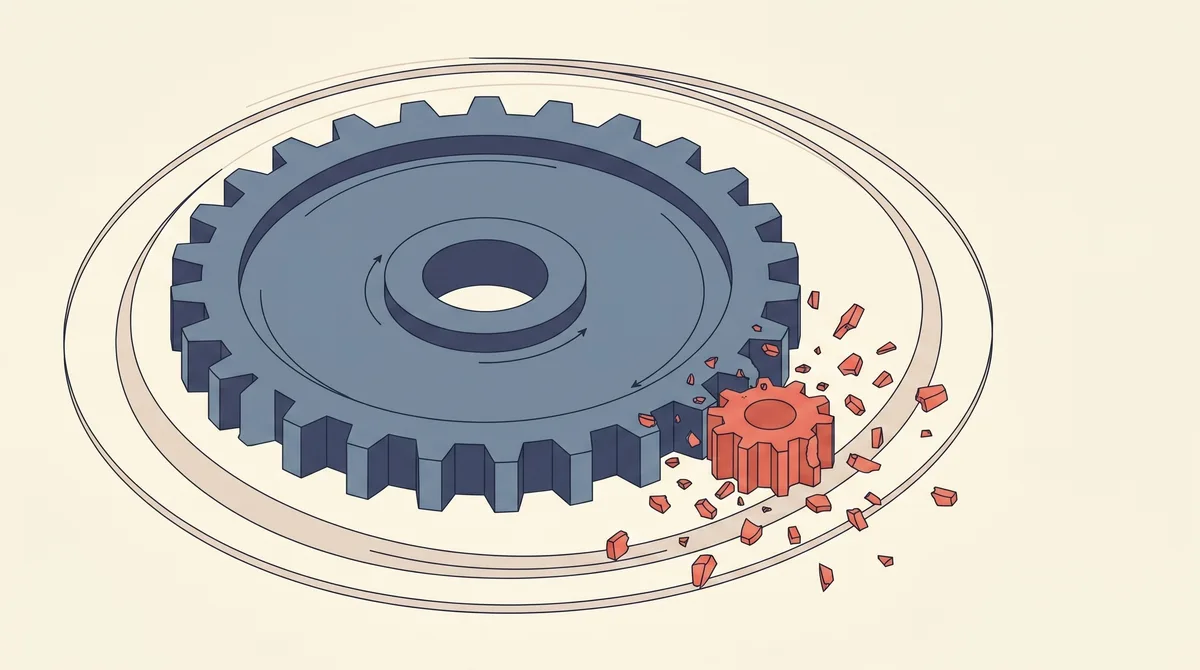
Solutions to AI displacement exist on paper. Universal basic income. Shorter work weeks. Worker ownership of AI systems. Capital taxation and redistribution. The policy toolkit is well-studied.
Two problems: speed and incentives.
Speed. AI capability is improving at a pace political systems simply do not match. Elections. Multi-year legislative cycles. Decades of cultural shift. Unless we had started on serious redistribution infrastructure five or ten years ago, we’re probably too late to stay ahead of the curve. The EU moves slowly. The US has not taken UBI seriously at the federal level. And every month that passes, more displacement happens and more wealth concentrates, which makes the political coalition for redistribution weaker, not stronger.
Incentives. Capitalism encourages competition. Competition encourages cost minimization. Labor is a cost. Any policy that cushions AI displacement (UBI, mandated shorter weeks, profit-sharing, capital taxation) cuts directly into profits. Companies aren’t evil for adopting AI and cutting jobs. They’re acting rationally within the incentive structure. But that same structure makes collective adaptation politically and economically hard.
And even if you accept UBI as the answer, there’s a second problem most UBI conversations skip.
Who does the unpleasant-but-necessary jobs that AI can’t do?
Plumbers. Sewer workers. Waste collection. Eldercare. These roles aren’t getting automated any time soon. If displaced knowledge workers get the same UBI as everyone else, the wage for “cleaning out a backed-up sewer line” has to rise dramatically to attract takers. Where does that higher wage come from, if everyone else has been automated out of paying work?
The redistribution math is harder than the slogans suggest. None of this means UBI is a bad idea. It means UBI alone isn’t a complete answer. And neither is anything else I’ve seen proposed.
The Forcing Function
Capitalism has adapted to massive disruption before. The New Deal. Post-war social democracy. The welfare state. Each was a response to a forcing function: mass unemployment, war, organized labor, political crisis.
So the question isn’t “can capitalism adapt?” It can. It has.
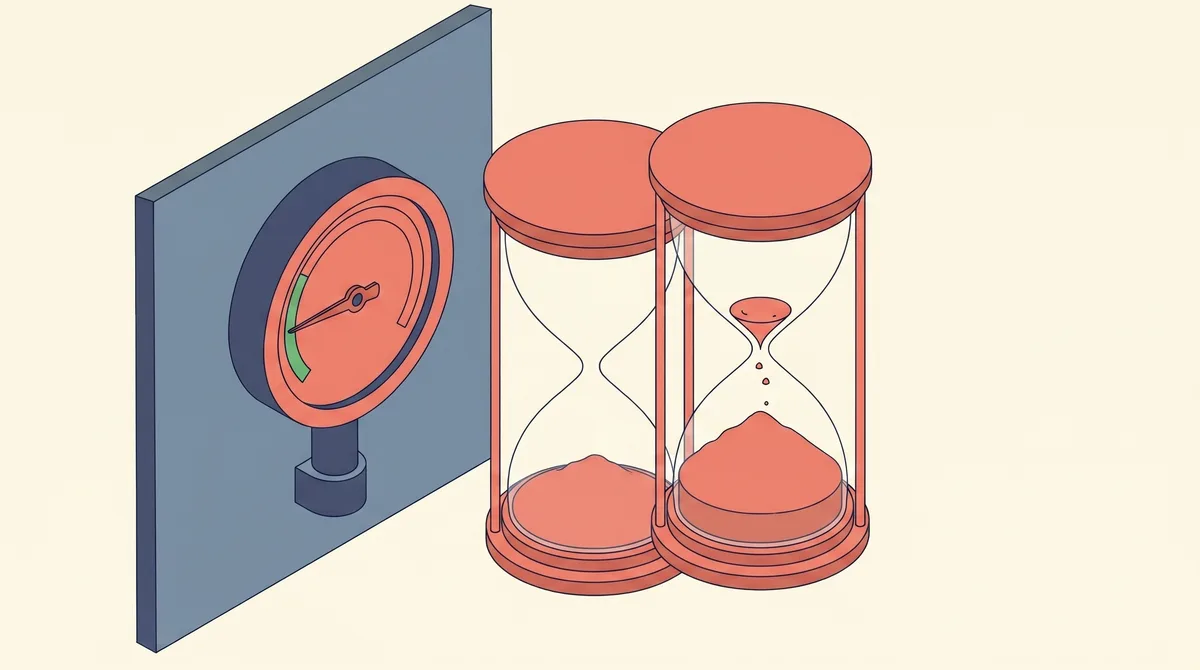
The question is whether the forcing function comes in time, or whether the system buckles first.
I don’t know the answer. I suspect nobody does. But the honest read of the evidence is that the current forcing function (rising inequality, stagnating wages for most workers, AI compute and models increasingly concentrated in a small number of firms) isn’t yet strong enough, or coordinated enough, to drive the kind of policy response the 20th century produced.
And the window is narrowing faster than political systems can move.
What I’m Not Claiming
Let me be direct about what this article is not.
It’s not a prediction of mass unemployment by a specific date. Labor markets have a way of surprising pessimists, and it’s possible (though in my view unlikely at the current pace) that this time is no different.
It’s not a call to stop developing or using AI. I build AI systems for a living. I think the technology is genuinely useful, and most of the productivity stories are real. You can’t put this back in the box.
And it’s not an argument that capitalism is “bad.” Capitalism has pulled more people out of poverty than any other economic arrangement in history. That’s not a small thing.
What I am claiming is narrower. AI substitutes for cognitive labor at near-zero marginal cost. Decision-makers optimize for margin and can’t easily distinguish good-enough from great. The reinstatement mechanism has been weakening for decades. And political systems can’t respond on the timescale AI moves. Put those four together and you get a structural mismatch the existing system probably can’t resolve on its own.
The Question That Actually Matters
The question isn’t “will AI replace jobs?” It’s already replacing jobs. That’s happening.
The question is who captures the gains, and how fast institutions can adapt to a world where those gains concentrate in a very small number of places.
If the answer is “slowly, if at all,” then what we’re calling an “AI transition” is actually a compounding structural crisis that only looks like previous transitions (industrial revolution, electrification, the PC) until you look at the timescales. Those earlier transitions played out over generations. This one is playing out over product cycles.
I don’t think AI and capitalism are doomed to be incompatible. I think they might be, under the current speed of AI development and the current capacity of political institutions. Change either variable meaningfully and the story changes.
As of April 2026, neither variable is changing in the right direction.
That’s the part I can’t shake.