How the Internet Dies

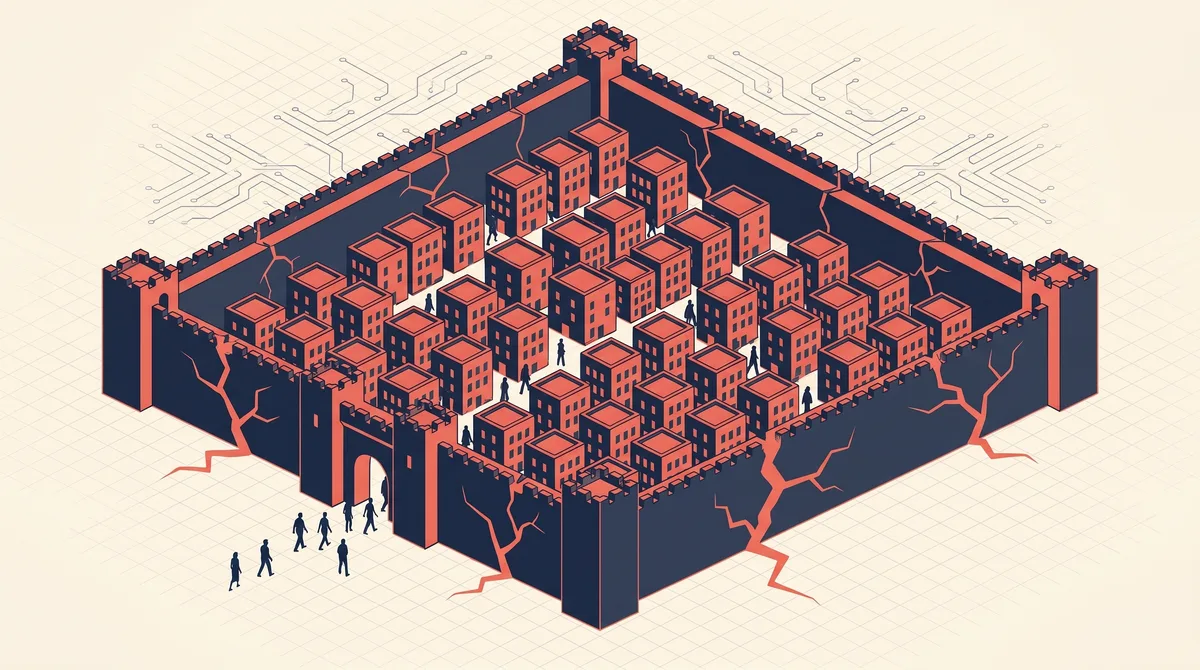
For years, “Dead Internet Theory” was framed as something done to us. Foreign bot armies. State-sponsored troll farms. Algorithmic propaganda flooding social media from the outside. A clean external villain you could point at, sanction, and try to take down.
That’s not really what’s happening. The platforms are doing it to themselves. Sometimes through outright bad-faith decisions. More often, through the kind of strategic confusion that looks identical to bad-faith from the outside.
In the last two years, four of the most human-feeling corners of the web (Pinterest, Reddit, Steam, Discord) have each made a series of decisions that are gutting the very thing that made them work. Some of those decisions are pure villainy. A lot of them, honestly, are just woefully bad judgment dressed up as strategy. The result is the same either way.
This isn’t really a “the internet is dying” piece. I genuinely don’t know what the internet looks like in five years. I’m pretty sure it’ll be very different from what we have today. But the mechanism is now visible enough that it’s worth writing down, because once you see the pattern, you can’t unsee it on whichever platform you open next.
Pinterest: Trying To Do Good, Doing Very Bad
If you want a textbook case of a company that probably had decent intentions and still managed to set itself on fire, Pinterest is it.
For about 15 years, Pinterest was a low-stakes corner of the internet where people went to find recipes, outfit ideas, wedding planning checklists, DIY projects. It was almost weirdly wholesome by social-media standards. The whole product depended on real humans curating and uploading real things.
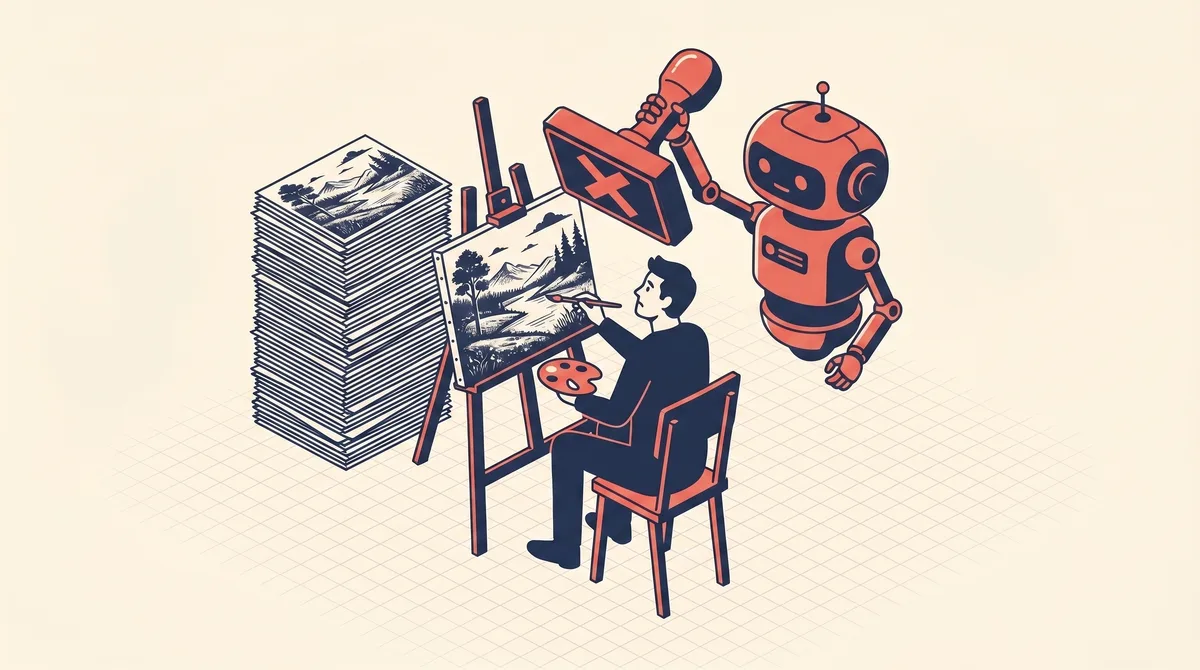
Then generative AI showed up, and Pinterest did roughly what every platform did. AI-generated pins started flooding in. Real artists got buried. The feed turned into a chore.
So Pinterest tried to fix it. They deployed AI moderators to clean up the AI flood. Predictably, this didn’t work. Artists like Tiana Oreglia and Min Zakuga started getting hit with takedown notices and “AI-modified” labels on entirely human-made art, as reported by 404 Media. Some of Zakuga’s flagged work pre-dated the public release of generative AI. The appeals process, where it works at all, takes hours of evidence-gathering for a single image.
This is the canary. When your moderation system can’t tell its own users apart from the thing it’s supposed to be detecting, the system isn’t slightly broken. It’s misaligned with what the platform is for. Every false flag tells a working artist that the platform now treats them as the threat.
But here’s the part that’s harder to write off as well-intentioned mistakes:
In late January 2026, Pinterest CEO Bill Ready announced he was laying off close to 15% of the workforce, about 700 people, to “double down on an AI-forward approach.” Standard AI-bubble move. Cut humans, hire AI, tell the market a story. It’s been the dominant playbook for two years.
The truly telling part came a week later. Two engineers built an internal tool to track which colleagues had been laid off, because Pinterest refused to share that information broadly. Bill Ready responded by firing those engineers and calling them “obstructionist” at an all-hands. He told remaining staff that anyone “working against the direction of the company” should consider leaving.
That sequence is the part I keep coming back to. It’s not the layoff. Layoffs happen. It’s that the same executive team running a platform built on community and human creativity is now openly classifying internal solidarity as obstruction. There’s a kind of strategic confusion there that goes beyond cost-cutting. It’s not that they don’t see the contradiction. It’s that they don’t see the platform.
Behind the scenes, Pinterest also quietly fed 15 years of human curation into ”Pinterest Canvas”, their proprietary text-to-image generator. Legally, the ToS allowed it. Ethically, it’s ugly. Strategically, it’s worse. They’re competing with every general-purpose image generator on the planet, on the basis of training data they’re actively burning the goodwill to keep accumulating. I’m not sure that’s even profitable.
Reddit: The One That’s Actually Villainy
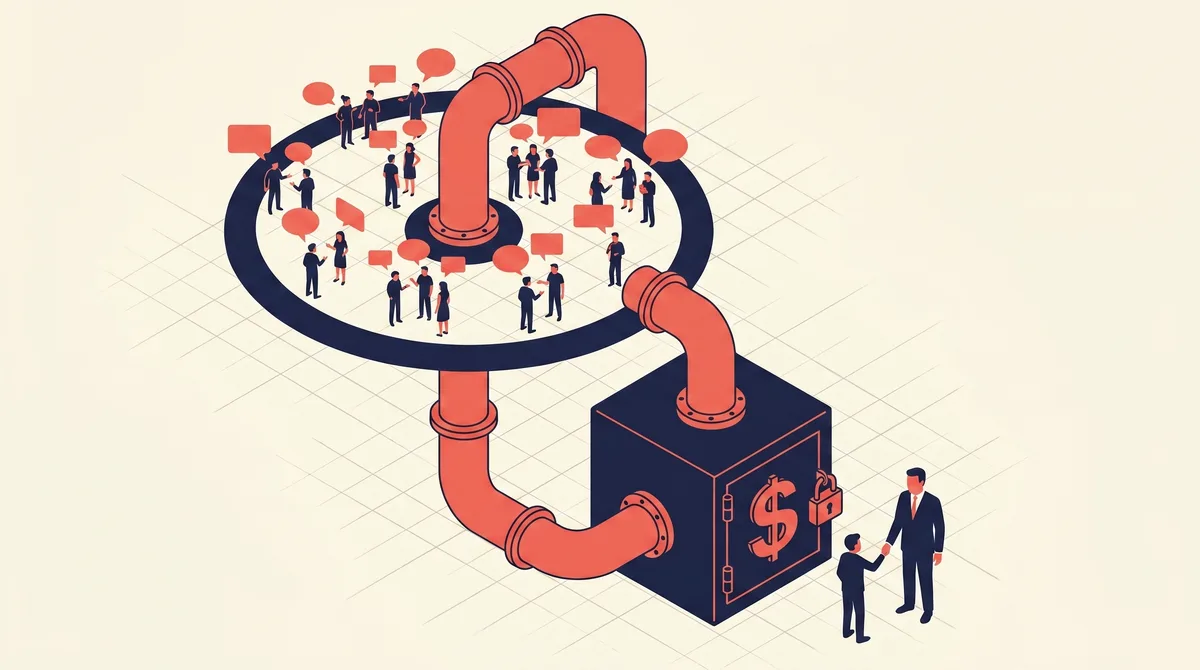
If Pinterest is a story about bad judgment, Reddit is a different story.
In February 2024, Reddit signed a content-licensing deal with Google worth roughly $60 million per year to train Google’s Gemini models. A second deal with OpenAI followed. Combined with other licensees, those agreements were worth $203 million by the end of 2024. Reddit is now reportedly pushing for a dynamic-pricing model with Google where the payout grows as their data becomes more central to AI products.
Three things are true about this deal at once.
It’s damaging. Two decades of personal stories, advice threads, niche-expert subreddits, support communities. The kind of content people wrote because it felt like talking to other humans, not because they were producing training data. Selling the lot of it changes the contract retroactively.
It’s defensible. Reddit loses money. They went public. They have shareholders. Walking away from a $60M/year deal that nobody could competitively match would have been hard to justify in any board meeting.
It’s also the kind of thing every other platform would have done. Reddit didn’t have unique virtue to lose. The deal turned a one-time scrape (which was already happening, illegally and constantly) into a recurring revenue line. From a purely commercial angle, Reddit is right that they were sitting on a goldmine.
All three are true. Which means the moral framing matters less than the structural one: once one platform monetizes its user-generated content as training data, every other platform has to decide whether to leave money on the table or not. The answer, predictably, was not.
The damage isn’t just the data. It’s what the deal changed about the game for everyone else.
The moment it became publicly known that Reddit posts shape Gemini and ChatGPT, a new manipulation vector opened up. If you can shape what an AI learns by shaping what it reads, then Reddit isn’t just a propaganda surface (which it has been for years). It’s a propaganda surface that compounds. A poisoned subreddit today is a poisoned model tomorrow.
This isn’t theoretical. Recent research from Anthropic found that as few as 250 malicious documents can backdoor LLMs ranging from 600M to 13B parameters, regardless of model size. A 2025 study estimated 15-25% of scraped training datasets contain low-quality or unverifiable content. State actors, content farms, and political operations have been poisoning that source at industrial scale, for pennies per article.
So when you see the wave of obvious AI-written posts on subreddits like r/AmIOverreacting or r/AmITheJerk (designed to play on emotion, often loaded with culture-war bait), you’re not just looking at engagement spam. You’re looking at two flywheels at once. One farms karma and ad impressions. The other potentially shapes how the next generation of large language models thinks about an entire category of human conflict.
I genuinely hadn’t stopped to think about that second one until recently. It is a much bigger problem than the first.
Reddit moderators now estimate that as much as half the content on the site was written or edited by AI in some form. That number is unverifiable and probably loose. The direction is what matters. The more data feeds the AI machine, the better it gets at producing posts that fit the subreddit, fit the thread, fit the cadence of the conversation. Detection lags generation, and that gap is widening.
The honest user response is r/Reddit’s own meta-question: “If I don’t know whether I’m talking to a real person or an AI bot, what’s the point in posting anything?” Once trust dies, the platform is done. It can keep generating revenue for years off inertia, but the thing that made it worth visiting is gone.
Steam: They Couldn’t Have Policed It Anyway
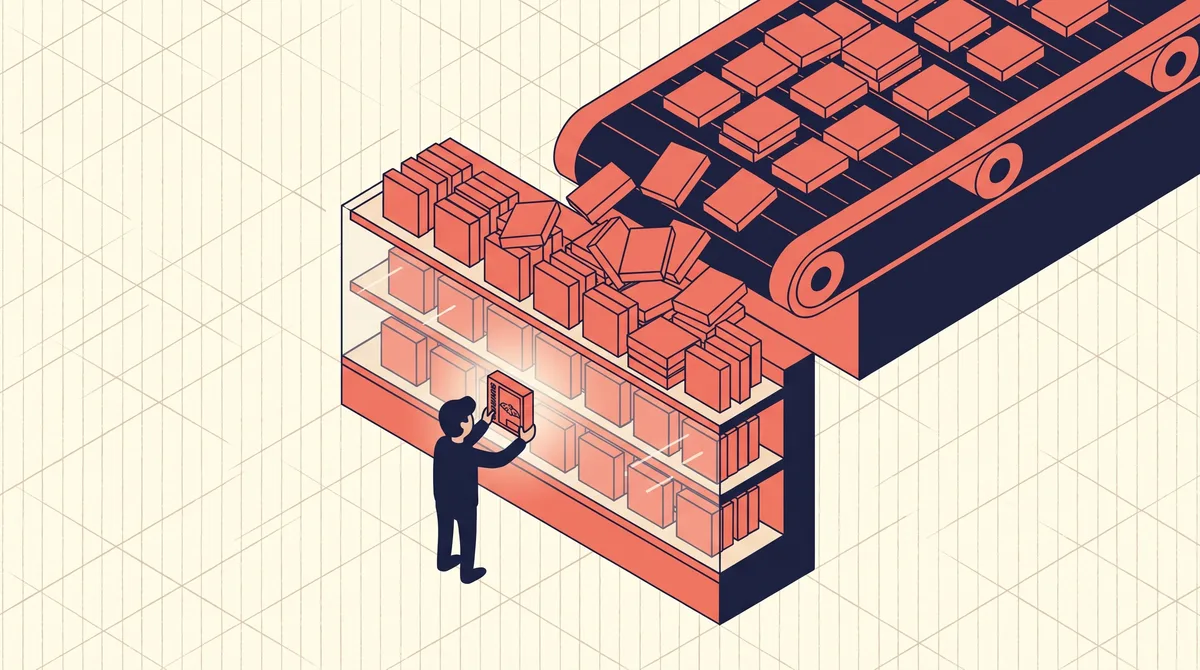
Steam is the case where I’m least angry, because I’m not sure they had a real choice.
In the early 2020s, Valve took a near-hardline stance against AI-generated assets. By early 2024, they reversed course and started allowing AI content with disclosure. By the first half of 2025, around 8,000 Steam games disclosed AI use, an 8x increase over the roughly 1,000 disclosures for all of 2024. As of March 2026, over 7,300 games on Steam have disclosed AI content, and Valve has clarified that “AI-powered tools” like code helpers don’t require a disclosure at all.
The result is what you’d expect: a flood of so-called asset flips, low-effort games stitched together from AI-generated and store-bought models, code, and environments by people who barely touched a development tool. Reports suggest at least 1 in 5 games uploaded now uses AI in some form.
The damage cuts in four directions:
- Indie developers can’t get discovered when 8,000 AI-disclosed listings hit Steam in six months and the storefront has no way to filter them out.
- Players waste real money on slop that looks like a game in screenshots and turns out to be a barely-coherent demo.
- The medium itself gets cheapened. Games as a creative form depend on a baseline assumption that someone made the thing.
- Steam’s brand is the asset that took 20 years to build, and it’s the one Valve is currently spending hardest.
The realistic thing to say is that Valve probably couldn’t have policed this. Disclosure is a paperwork gesture; users don’t read disclosures. A strict ban would have been both unenforceable and arbitrary, since “AI-assisted” is now a continuum that runs from autocomplete in your IDE to “generate an entire game from a prompt.” The line is real but undefined.
A human-only sanctuary tier, with verification, would have been an interesting choice. They didn’t take it. Two years from now, I think they’ll regret that, the way Pinterest will regret the moderation rollout.
Discord: The Messy Honest Middle Case
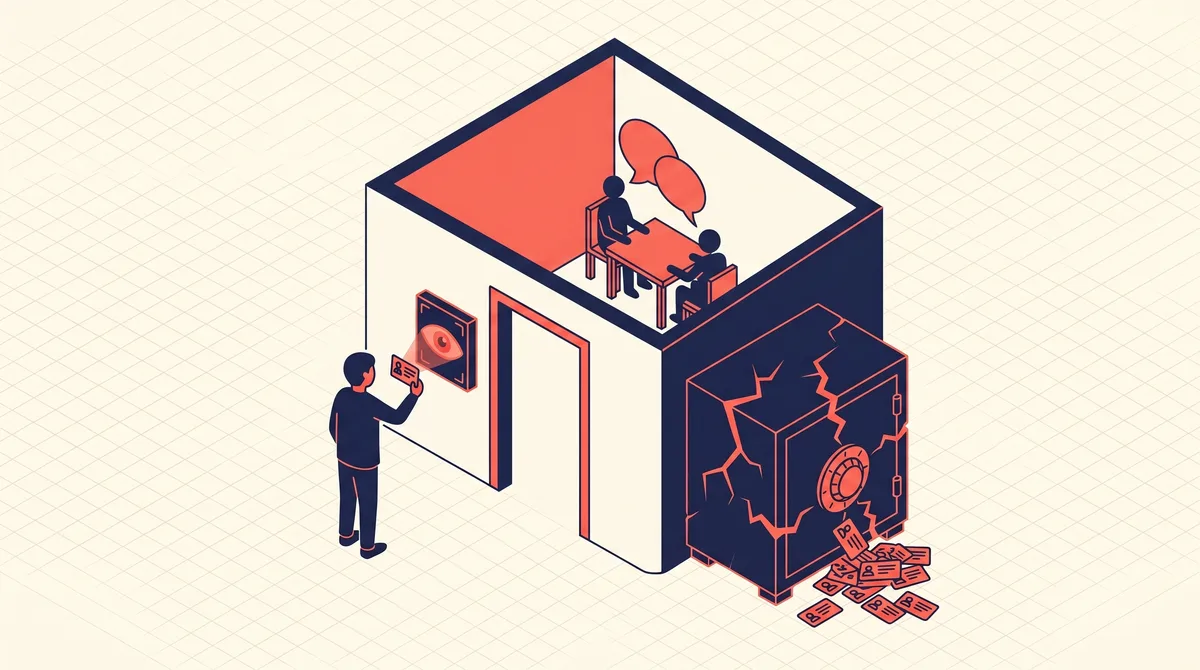
Discord is the case where I keep flip-flopping, because the actual situation is more nuanced than the obvious dystopian read.
The dystopian read goes like this. Discord embraced AI features users didn’t ask for: Summaries AI, AI mods, AI bots that auto-respond. Servers got saturated with AI-generated text and images. The 2024 ”Spy Pet” scraper allegedly stole billions of messages from 600M+ users and resold them online. And then Discord announced a mandatory age-inference system that would monitor user behavior to detect minor accounts, originally planned for March 2026.
The backlash was immediate. About 70,000 users had government-ID photos exposed when a third-party verification vendor was breached. Discord delayed the global rollout to the second half of 2026. CTO Stanislav Vishnevskiy said the company “missed the mark.” The new plan is “teen-by-default” until verified, with multiple verification options including credit card.
Here’s where I’m conflicted. The age-inference AI part actually doesn’t bother me as much as it bothers a lot of people. Discord already has every message you’ve ever sent. Running those messages through an AI age classifier doesn’t suddenly grant access to anyone who didn’t already have it. It’s not a new surveillance vector. It’s a different filter on data they already store.
And on the bigger question of age verification at all: if a country is going to mandate a minimum age for chat platforms (which a lot of them are doing right now), I’d personally rather have AI looking at messages than have severely underpaid third-world moderators reading them, often without proper mental health care, often getting permanently traumatized by the worst content the platform ever sees. That’s not a great choice, but it’s the choice that’s actually on the table.
The biometric ID part is where it gets harder to defend. Asking users for facial scans or government IDs to access a chat platform crosses a line I don’t think should be crossed for a private-comms tool. The 70,000-ID breach is the proof that the line is real. Once you start collecting that data, somebody loses it. And it’s not clear how far down this road we have to go before “verified” still means anything (deepfaked IDs, AI-generated faces that pass liveness checks, the whole adversarial loop).
So Discord is the platform I’m least sure about. I think the age-inference itself is probably fine. I think the way the rollout was handled was bad. I think the broader trend it’s part of (every consumer service eventually wanting biometric ID) is genuinely scary. And I don’t have a clean opinion on what the right line is.
The Trust Collapse

Underneath all four cases is one common shape: trust is the substrate and trust is what’s being burned.
People posted on Pinterest because pinning a real recipe felt like contributing to something. People posted on Reddit because the comment threads felt like talking to humans. People bought games on Steam because the storefront had a curatorial reputation. People joined Discord servers because the interactions felt private.
In every case, the value was downstream of the belief that the other side was human. AI doesn’t have to actually replace humans to break the system. It just has to make people uncertain enough to stop posting, stop buying, stop joining, stop trusting. That uncertainty is the actual product of every AI-content flood, every false moderation flag, every behavioral-classifier rollout.
Once you can’t tell, you stop. Once you stop, the platform’s value to the next user drops. And the platform, watching the engagement metric drop, leans further into AI to fill the gap. Each turn of the cycle accelerates the next.
I don’t think the platforms understand they’re in this loop. I think they think they’re managing a content problem.
The Recursive Problem (Or: AI Eating Itself)
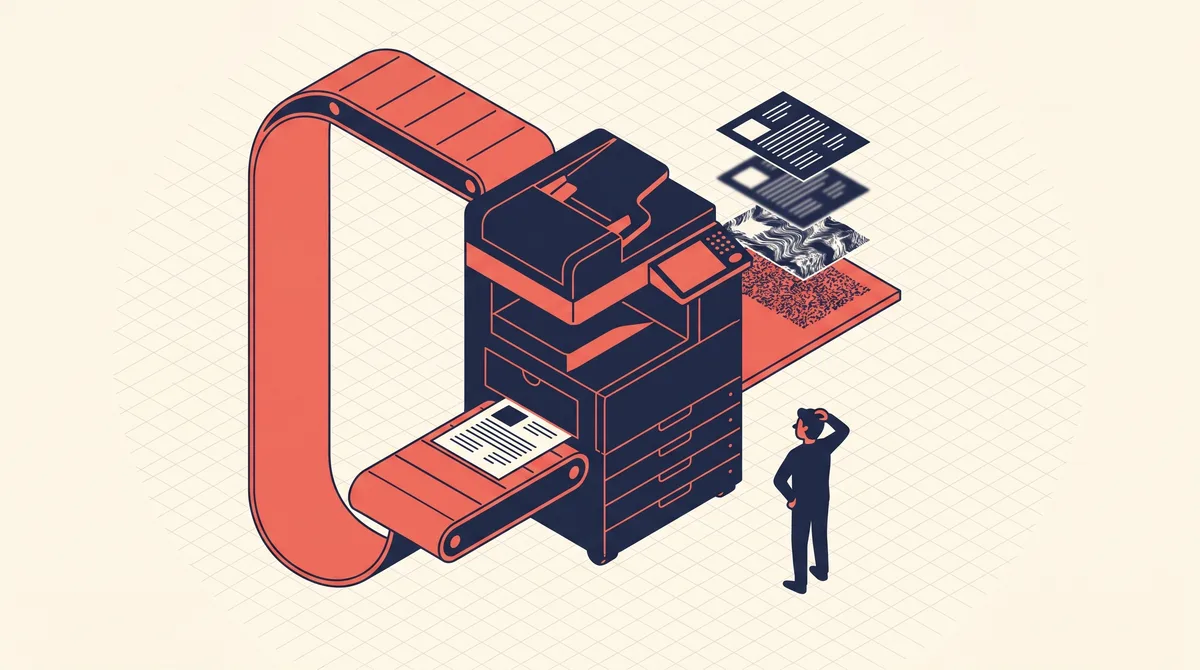
Here’s the part the platforms really don’t have an answer for.
Every model trained today is trained partly on data generated by yesterday’s model. As Nature’s foundational paper on model collapse showed in 2024, indiscriminately training on AI-generated data causes a degenerative process where models forget the true underlying data distribution over generations. Subsequent research has shown that even a small fraction of synthetic data (as little as 1 in 1,000) can be enough to start the slide.
There are mitigations. Curated synthetic data with verification, strong human-feedback loops, deliberate filtering. The 2026 consensus seems to be that the most capable models still need to be anchored in human-generated data, and the labs that have been the most aggressive about training-data deals know this better than anyone. It’s the reason Reddit’s licensing revenue keeps going up.
But the supply is shrinking. The platforms that produced that data are the same ones being hollowed out by AI slop. And every poisoning attack, every karma-farm bot, every AI-edited r/AmIOverreacting post lowers the signal-to-noise ratio in the data the models are trying to learn from.
This is what the Infographics Show video I watched got right at the end: it’s not just the internet that’s collapsing. It’s the AI models that depend on the internet, at the same time. There’s a real question about which one breaks first.
So What
I want to be honest about the parts I don’t know.
I don’t know what the internet looks like in five years. I don’t know if the bifurcation thesis (verified-human tier vs. AI-slop tier) is right, or if we just end up with a lower-quality version of what we have now. I don’t know if a backlash movement materializes or if we sleepwalk through this. I don’t know if proof-of-personhood is a workable answer or a worse cure than the disease.
I don’t know how to fix it at scale. Honestly, nobody I’ve read seems to know either. Anyone selling you a clean fix is selling you something.
A few things I’m fairly confident about:
- The pattern is structural, but it has villains. Pinterest’s moderation rollout is bad judgment. Reddit’s data deals are deliberate. Both are real. The “this is just how technology evolves” framing lets too many specific decisions off the hook.
- The “inside job” framing is more useful than the “foreign bots” framing. The bots are real. They’re not the main story. The main story is the platforms that turned the screw.
- Once trust dies on a platform, it doesn’t come back. Reddit and Pinterest are both on the wrong side of that line right now. Steam is closer to it than they think. Discord’s outcome depends on what they do with the second-half-2026 rollout.
- The recursive AI-on-AI problem is a real ceiling on capability gains. It’s not the only ceiling, but it’s the one that gets less coverage than it deserves, because labs don’t talk about it and platform CEOs don’t read the literature.
I keep oscillating between two feelings about all this, and I think the article should be honest that I haven’t reconciled them.
The first is sad. Something good is being lost. Reddit in 2014 was a genuinely useful thing in a way it’s not anymore. Pinterest boards still saved by users in 2018 had a kind of human-curated taste that no model is going to replicate. There were corners of Discord that felt like proper communities. They’re going.
The second is curious, almost detached. It’s interesting to watch a system find a new equilibrium when its substrate is changing under it. Some of what comes next will be worse. Some will be unrecognizable. Some of it may, eventually, be better, in ways we’re not in a position to see from here.
The internet is going to be very different in five years. The question isn’t really whether to mourn it (mourn what’s worth mourning), or whether to plan for it (you should). The question is whether the specific people running the platforms today are going to do anything that earns them the right to still be running them when the dust settles.
Right now? Mostly not.