How Anthropic Is Quietly Winning the AI Race


In March 2026, Fidji Simo told her team at OpenAI that they couldn’t afford “side quests” anymore. As CEO of Applications, she was overseeing the shutdown of Sora (which burned an estimated $15 million per day in inference costs while earning just $2.1 million in total lifetime revenue), the consolidation of a scattered product portfolio, and a hard pivot to enterprise. Her words to the team were blunt: “We cannot miss this moment because we are distracted by side projects.”
As of March 2026, Anthropic’s ARR (annualized run rate, the most recent month’s revenue multiplied by twelve) has surged to $19 billion, up from $1 billion just fifteen months earlier. ChatGPT’s consumer market share has dropped from 86.7% to 60.4% in a little over a year, according to First Page Sage’s blended estimate, with all major trackers confirming the directional decline.
Anthropic did not win by having the most users, the most compute, or the loudest marketing. They won by being the most focused, the most disciplined, and the most strategic about where to compete. While OpenAI chased video generation, browser plugins, and hardware, and Google tried to integrate AI into everything at once, Anthropic placed a single bet on coding AI and enterprise. That bet created a flywheel that is now spinning faster than anyone can match.
How did a company founded just five years ago, with a fraction of OpenAI’s brand recognition and Google’s resources, pull this off? It started with a bet most people thought was too narrow.
The Long Game
The Bet on Coding AI
In September 2024, Boris Cherny started building Claude Code, a terminal-based AI coding agent that can read codebases, write code, run commands, and ship changes, as a side project using Claude 3.5 Sonnet. The model could maybe write 20% of his code at the time. He built the product anyway.
This sounds reckless until you hear his reasoning: “At Anthropic, we don’t build for the model of today, we build for the model of six months from now.” He was betting that the model would catch up to the product. And he was right. When Opus 4 shipped in May 2025, everything clicked. Growth went vertical.
That bet only made sense inside a company that had already made a much larger one. While OpenAI was pursuing Sora, a web browser, hardware devices, and robots alongside its coding tools, and while Google was trying to push Gemini into Search, Android, Workspace, and its Apple Siri partnership all at once, Anthropic zeroed in on two things: coding AI and enterprise. Nothing else.
Boris has been explicit about this focus: “For Anthropic, we’re an enterprise AI company. We build consumer products, but for us, really, the focus is enterprise.”
What the Competitors Were Doing Instead
The contrast with OpenAI’s approach is hard to miss. Simo herself acknowledged the cost of spreading thin: “We realized we were spreading our efforts across too many apps and stacks, and that we need to simplify our efforts. That fragmentation has been slowing us down.” Internal teams had been duplicating work across products. The company that defined the AI race was reorganizing just to keep up with a competitor that had placed far fewer product bets, consistently focused on enterprise and coding.
Google’s story was different but equally telling. The company delayed Gemini’s complete takeover of Google Assistant until 2026 after a reality check on complexity. And developer friction was a real problem. A blog post about Gemini API key frustration (describing a 30 to 45 minute onboarding process versus Anthropic’s 5 minutes) hit the Hacker News front page. When your own Google Developer Expert says it is easier for an EU enterprise to use the latest Claude model on Google Cloud than the latest Gemini model, something has gone sideways.
The conventional wisdom in 2024 was that Anthropic was too narrow. No image generation. No video. No consumer app store. No hardware partnerships. The assumption was that multimodal, do-everything platforms would win because that is how platform wars have always played out.
But Anthropic was not playing that game. They were playing a different one entirely, and the narrowness was the point. Every engineer, every dollar, every model improvement was aimed at making coding AI better for the people who would pay the most for it: enterprises.
The focus on coding AI did not just produce a popular product. It produced something more unusual: a tool that could build itself.
The Recursive Loop
The Self-Building Tool
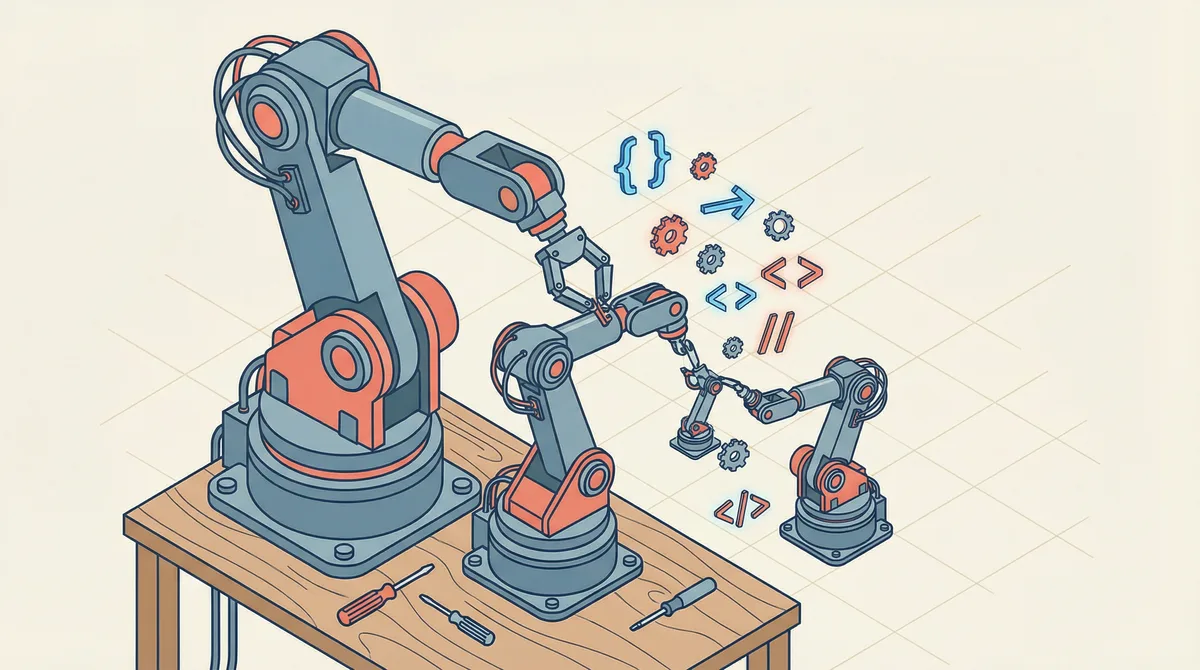
Approximately 90% of Claude Code’s codebase was written by Claude Code itself, with human direction. That number, reported by the Pragmatic Engineer, is not a marketing line. It is the foundation of everything that follows.
Between 70 and 90% of the code Anthropic uses to train new Claude models is now written by Claude, according to TIME. The tool is building itself, and it is building the models that make it better at building itself. This is the recursive loop.
Boris Cherny put it concretely: “I shipped 22 PRs yesterday and 27 the day before, each one 100% written by Claude.” He hasn’t written a single line of code by hand since November 2025. At peak, running five parallel Claude instances, he ships 20 to 30 PRs per day. His 30-day average is around 8.6 PRs per day. For context, the industry norm is one to two PRs per engineer per day.
Dario Amodei, Anthropic’s CEO, confirmed this is not just Boris: “I have engineers within Anthropic who say ‘I don’t write any code anymore. I just let the model write the code, I edit it.‘”
The Velocity This Produces
The organizational philosophy behind this velocity is deliberately uncomfortable. Boris described it this way: “There’s this interesting thing when you underfund everything a little bit, because then people are kind of forced to Claude-ify.” In other words, Anthropic intentionally understaffs projects so engineers have no choice but to use AI maximally. Then they pair that constraint with generosity on the other side: “Start by just giving engineers as many tokens as possible.”
The result is shipping velocity that looks implausible from the outside. Between February 3 and March 24, 2026, Anthropic pushed 74 releases in 52 days, as tracked by Product Compass. Plan Mode was built in 30 minutes on a Sunday night and shipped Monday morning. The Plugins feature was built entirely by a swarm of agents over a weekend with minimal human intervention.
Cowork, Anthropic’s desktop AI agent for non-technical knowledge work, was assembled in about 10 days by a team of four, with all code written by Claude Code. Though it is worth noting (as Felix Rieseberg, one of its builders, clarified) that those 10 days were about picking the right pieces out of 1.5 years of internal prototypes. “Within Anthropic there was like a lot of stuff already happening.” Still, 10 days from prototype selection to shippable product, for a team of four, is not normal.
As of February 2026, Claude Code authors 4% of all public GitHub commits, according to SemiAnalysis, which projects that figure will reach 20%+ by end of 2026. Important context: 90% of those commits land in repositories with fewer than two stars, meaning mostly personal and experimental projects, not production code. But the trajectory matters. Spotify co-CEO Gustav Soderström said on the Q4 2025 earnings call: “When I speak to my most senior engineers, the best developers we have, they actually say that they haven’t written a single line of code since December.”
The Compounding Advantage
Here is the part most observers miss. Claude Code can run in “fast mode,” which uses the same Opus 4.6 model with faster output at considerably higher compute cost. Anthropic engineers almost certainly run fast mode constantly with unlimited token budgets. And they likely already have access to unreleased models internally, including the Mythos (Capybara) model that leaked in March.
Connect this to Boris’s stated philosophy of unlimited tokens. Combine unlimited fast mode, unreleased frontier models, and five parallel instances per engineer, and you get a development velocity advantage that compounds with every model improvement:
- Better model means engineers build faster, which means more features ship, which means more usage data, which means a better next model.
- This loop accelerates every cycle because the tool improving the model is the model.
- Competitors cannot replicate this. They do not have the same combination of model quality, internal tooling, and unlimited token budgets.
- By the time competitors match today’s Claude, Anthropic’s engineers are already building with next-generation Claude.
Shipping fast is one thing. But velocity only matters if you are building the right things. Anthropic’s most strategically important creation was not a product but a protocol.
The Ecosystem Play
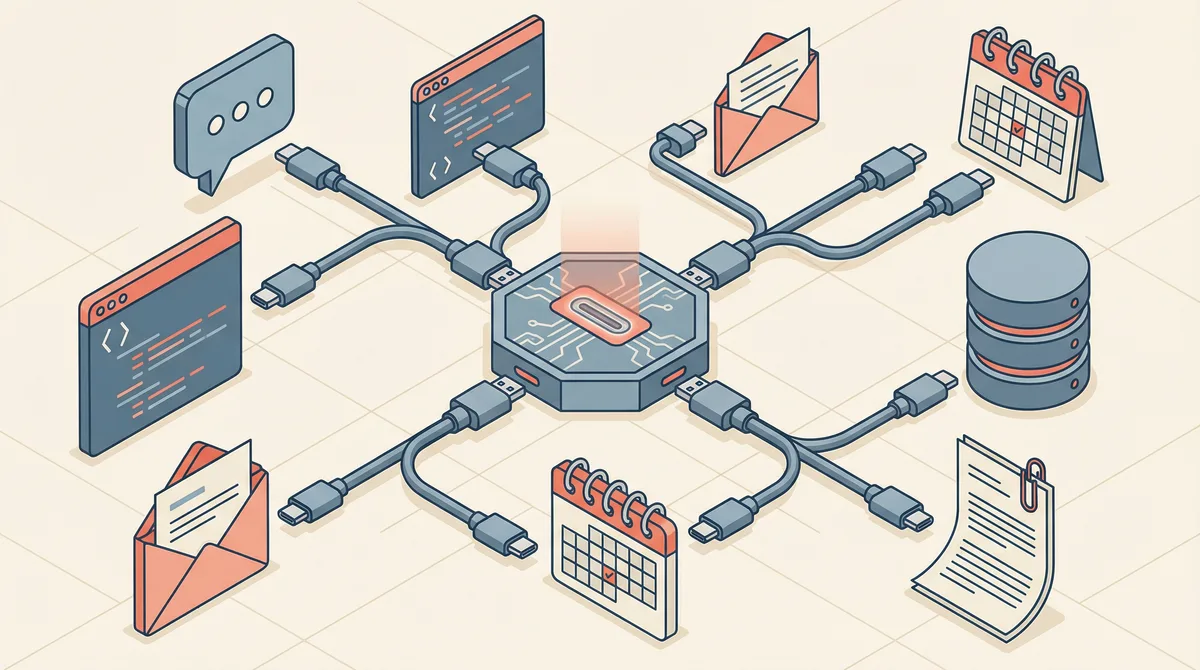
Before MCP, every new AI integration was a custom engineering project. If you had M different AI models and N different tools, you needed M x N custom integrations. Every model needed its own connector for every tool. It was a combinatorial explosion that made enterprise AI adoption painful and fragile.
MCP reduced that to M + N. Build one client for each model and one server for each tool, and any client works with any server through a shared standard. The analogy that stuck: USB-C for AI.
The protocol was created by David Soria Parra and Justin Spahr-Summers, two Anthropic engineers. Soria Parra had been frustrated by constantly copy-pasting code between Claude Desktop and his editor while building developer tools. He had also been working on a Language Server Protocol (LSP) project, which inspired the architecture: JSON-RPC 2.0 for standardized client-server communication. On November 25, 2024, Anthropic released it as an open standard.
Open is the key word. And it is what made everything that followed possible.
The Adoption Cascade
In March 2025, OpenAI adopted MCP across its Agents SDK, Responses API, and ChatGPT desktop. In April 2025, Google DeepMind confirmed MCP support for Gemini. In August 2025, Microsoft announced MCP integration for Windows, agents, Foundry, and Azure.
Then came the most important move. On December 9, 2025, Anthropic donated MCP to the newly formed Agentic AI Foundation under the Linux Foundation, co-founded by Anthropic, Block, and OpenAI. Platinum members include AWS, Google, Microsoft, Cloudflare, and Bloomberg, with Salesforce, Snowflake, and over a dozen others at the Gold tier.
As of March 2026, the numbers speak for themselves: 97 million+ monthly SDK downloads, 10,000+ active public MCP servers, and 70+ MCP clients supporting the protocol. SDKs exist in Python, TypeScript, Java, Kotlin, C#, Go, PHP, Ruby, Rust, and Swift.
Why OpenAI’s Approach Failed (and MCP Succeeded)
To understand why MCP won, look at what it replaced. OpenAI launched Plugins in March 2023 with a proprietary format and text-only UI. When adoption stalled, they pivoted to Custom GPTs in November 2023. Over 3 million were created, but only around 159,000 were ever made public. OpenAI shut down Plugins entirely in April 2024.
The core failure: your work only ran on ChatGPT. Build a plugin, and it was locked to one platform. MCP is vendor-neutral. The same MCP server works with OpenAI, Anthropic, Google, or anyone else. No rewrites, no lock-in.
OpenAI had announced MCP support in March 2025 and rolled out native integration in ChatGPT by October. They spent two and a half years building proprietary connectors only to end up implementing Anthropic’s standard anyway.
The developer community noticed. When Anthropic posted its MCP donation to the Linux Foundation on r/ClaudeAI, it got 4,363 upvotes and 116 comments. Nine days later, OpenAI posted its App Directory launch on r/OpenAI. It got 237 upvotes and 94 comments. An imperfect measure, but the contrast in engagement is hard to ignore.
One commenter on the OpenAI post summed up the mood: “I’d rather get a trustworthy AI that’s very good at programming. What do we need more apps for?”
The Real Vision
MCP is not just a developer tool. The real power is in cross-functional enterprise workflows.
An IT support issue reported via Slack triggers an AI agent that gathers context, creates an engineering ticket, and assigns priority. All through MCP connections. Sales pre-meeting prep pulls from HubSpot CRM and Gmail simultaneously, summarizing recent communications and open action items. Engineering daily check-outs gather task updates from Linear and commits from GitHub, post unified summaries to Slack.
As Block’s CTO put it: “Open technologies like the Model Context Protocol are the bridges that connect AI to real-world applications.” The Linux Foundation’s executive director was even more direct about the strategy: “Our goal is to avoid the emergence of a ‘walled garden’-style proprietary technology stack.”
Anthropic did not just build a protocol. Anthropic built a standard for the entire AI industry, got every competitor to adopt it, and then locked it in by donating it to a neutral foundation. It was as much a strategic move as an engineering one.
The Platform Beneath the Platform
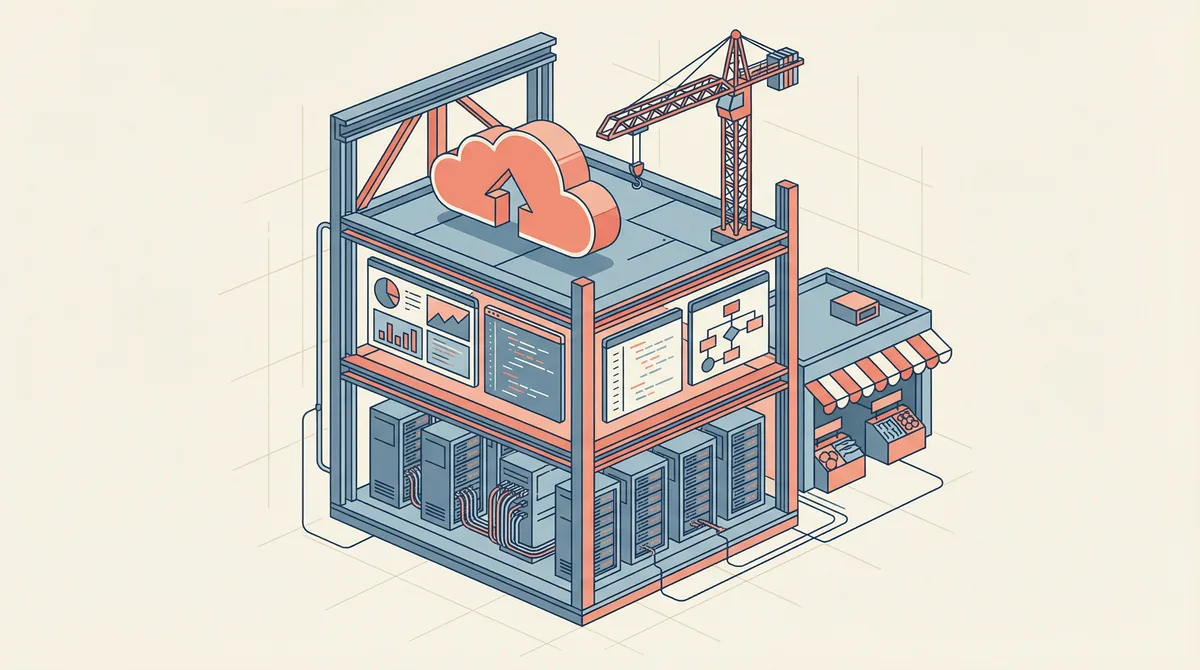
MCP connected AI to existing tools. But Anthropic was not content to just be the connective tissue. A discovery in March 2026 revealed they were building something much bigger underneath.
On March 18, 2026, a developer named AprilNEA published findings from reverse-engineering Claude Code’s runtime environment. Using standard Linux tools within a Claude Code session, they uncovered an entirely undisclosed Platform-as-a-Service called Antspace and a web app builder called Baku.
The findings were striking. Inside Claude Code’s runtime, two deployment targets were found: the known Vercel integration and a previously unseen one called Antspace. The key detail: Antspace is the default, not Vercel. Vercel exists only as an alternative.
The full pipeline: user intent flows to Claude, then to Baku (code generation), then to Supabase (database), then to Antspace (hosting), then to a live app. From idea to deployment without ever leaving Anthropic’s ecosystem.
As one Reddit commenter put it: “This isn’t about a chatbot getting a deploy button. This is the Amazon AWS playbook.”
To be clear, Antspace is unconfirmed and unreleased. It could be deprecated internal tooling. Anthropic has not commented. But the discovery sent a signal: Anthropic may be building a vertically integrated stack from the LLM all the way down to hosting. If true, it threatens Vercel, Netlify, Replit, Lovable, Bolt, and Railway simultaneously. Not because Anthropic would be a better hosting provider, but because they would own every step from understanding your intent to deploying your app.
The Marketplace
While Antspace remains speculative, the Marketplace is real. Launched March 6, 2026 in limited preview, with six launch partners: GitLab, Harvey, Lovable, Replit, Rogo, and Snowflake. Enterprise customers can apply their existing Anthropic spending commitments to purchase third-party Claude-powered apps.
The most telling detail: Anthropic takes no commission. For comparison, the AWS Marketplace charges 3-15%. Zero commission is a land-grab strategy. Anthropic is buying ecosystem loyalty with margin.
The Partner Network
Alongside the Marketplace, Anthropic committed $100 million to its Partner Network for 2026. Anchor partners include Accenture, Deloitte, PwC, KPMG, Cognizant, and Infosys. A Claude Certified Architect credential is available immediately.
The scale of enterprise buy-in is real. Deloitte (470,000 employees) has built a Claude Center of Excellence and certified 15,000 professionals. Accenture has trained 30,000 professionals on Claude.
The Microsoft Deal
On March 9, 2026, Microsoft integrated Claude Cowork technology into Microsoft 365 Copilot, creating Copilot Cowork. Built on a $30 billion Azure compute deal. It can build presentations, pull data into Excel, and email co-workers to set up meetings.
Think about what this means. Microsoft did not build its own version of Cowork. It licensed Anthropic‘s. That puts Claude inside the world’s dominant enterprise productivity suite, reaching hundreds of millions of Office 365 users. When your competitor builds their flagship product on your technology, you have moved from being a vendor to being infrastructure.
The Full Stack
Walk through the complete ecosystem as of March 2026, and the pattern becomes clear:
- Model layer: Claude (Haiku, Sonnet, Opus, with Capybara tier coming)
- Developer tools: Claude Code, Agent SDK, IDE extensions
- Enterprise products: Cowork, Dispatch, Computer Use, Channels
- Connective tissue: MCP, 75+ connectors, Agent Skills
- Platform: Marketplace (zero commission), Partner Network, Certifications
- Infrastructure (discovered, unreleased): Antspace, Baku
- Cloud: AWS, Google Cloud, Azure, Palantir
That is not a chatbot company. That is a platform company. And if the Antspace discovery holds up, it is a platform company building its own infrastructure layer.
The Numbers
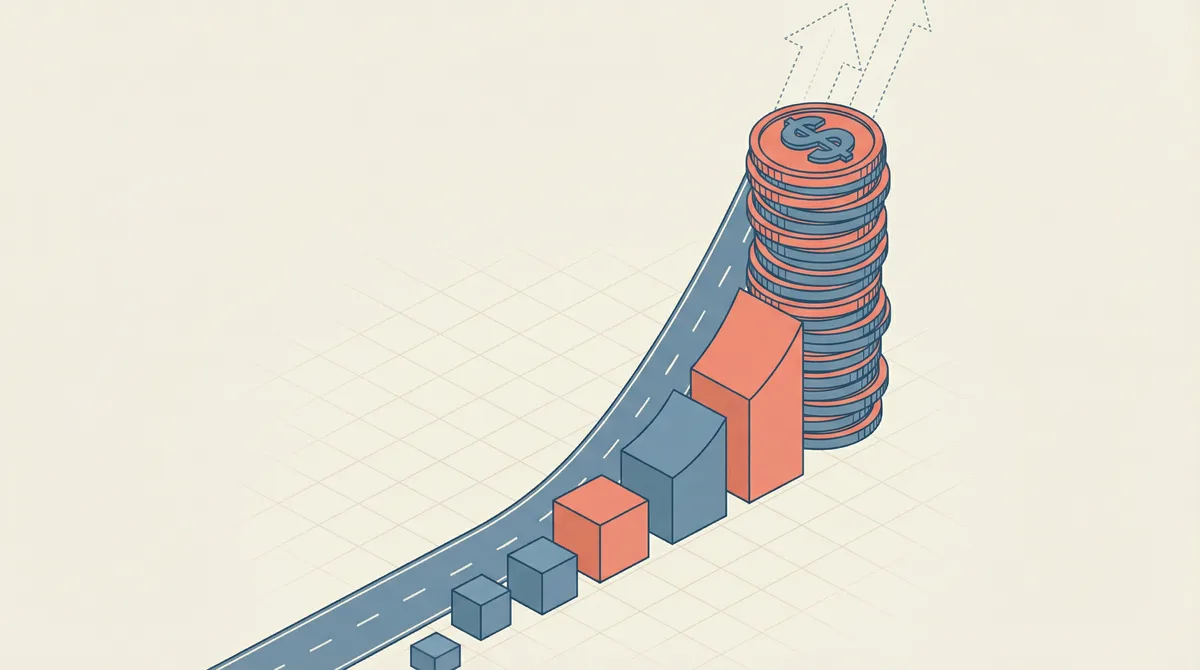
Building a platform is one thing. But does the market actually validate it? Here is what the market data shows.
The Revenue Trajectory
Here is the timeline:
| Period | ARR |
|---|---|
| December 2024 | ~$1B |
| Mid-2025 | ~$4B |
| End of 2025 | ~$9B |
| February 2026 | $14B |
| March 2026 | $19B |
That is 1,167% year-over-year growth as of March 2026. SaaStr put it bluntly: “No enterprise technology company in recorded history has compounded at this rate at this scale: not Slack, not Zoom, not Snowflake.”
Claude Code alone hit $2.5 billion ARR as of February 12, 2026 (confirmed by Anthropic). From zero to $2.5 billion in approximately nine months.
A note on what these numbers mean: ARR is a forward-looking metric. Anthropic’s total lifetime revenue as of March 9, 2026 was approximately $5 billion per court filings. OpenAI’s reported ~$25 billion ARR uses the same methodology. These are projections of current velocity, not cumulative earnings.
The Enterprise Flip
The most revealing data comes from Menlo Ventures’ end-of-2025 survey of 495 enterprise decision-makers:
- Anthropic: 40% of enterprise LLM spend (up from 12% in 2023)
- OpenAI: 27% (down from 50% in 2023)
- Google: 21% (up from 7% in 2023)
Read those numbers again. In two years, Anthropic went from a 12% share to 40%. OpenAI went from 50% to 27%. The enterprise market did not just shift. It flipped.
The Ramp AI Index from February 2026 reinforces this: Anthropic wins 70% of head-to-head matchups among businesses purchasing AI for the first time. Ramp noted that Anthropic achieved “its largest monthly gains since we started tracking” while OpenAI experienced “the largest decline in any single month for any AI model company since we started tracking.”
As of October 2025, Anthropic had 300,000+ business customers, with 500+ spending over $1 million annually. Eight of the Fortune 10 are Claude customers.
The Revenue Crossover
This is where the trajectory gets interesting. Epoch AI, an independent research organization, published an analysis in March 2026: “Since each company hit $1B in annualized revenues, Anthropic has grown substantially faster (10x vs 3.4x per year) and could overtake OpenAI by mid-2026 if recent trends continue.”
The projected crossover: around August 2026 at approximately $43 billion ARR, with a 90% confidence interval spanning February 2026 to April 2027.
An important caveat: growth rates will slow. Anthropic’s own projections show 4x growth in 2026, down from the 10x pace they sustained through 2025. The crossover depends on sustained momentum, and sustaining momentum at this scale is genuinely hard. OpenAI still earns more in absolute terms (approximately $25 billion ARR as of March 2026). But the directional trend is clear: the gap is closing fast, and the rate of closure is accelerating.
The Developer Vote
The enterprise numbers tell the procurement story. The developer surveys tell the adoption story.
In the Stack Overflow 2025 survey, Claude Sonnet ranked among the most admired AI models among professional developers. GPT models were the most used (82%), but admiration lagged behind Claude. Developers use what their companies pay for. They admire what they would choose themselves.
The Pragmatic Engineer survey from February 2026 (roughly 1,000 senior developers, self-selected and senior-skewing) was more direct: Claude Code was the “most loved” coding tool at 46%, followed by Cursor at 19% and GitHub Copilot at 9%.
One detail stands out. Claude is used more by professional developers (45%) than those learning to code (30%). It resonates specifically with experienced engineers, the people who know what good tooling feels like. And as of early 2026, Claude powers the two most popular AI coding editors, Cursor and Windsurf, meaning even developers who do not use Claude directly are often using Claude underneath.
Revenue and enterprise adoption are the rational story. In February 2026, the story became something else entirely.
The Accidental Marketing Campaign
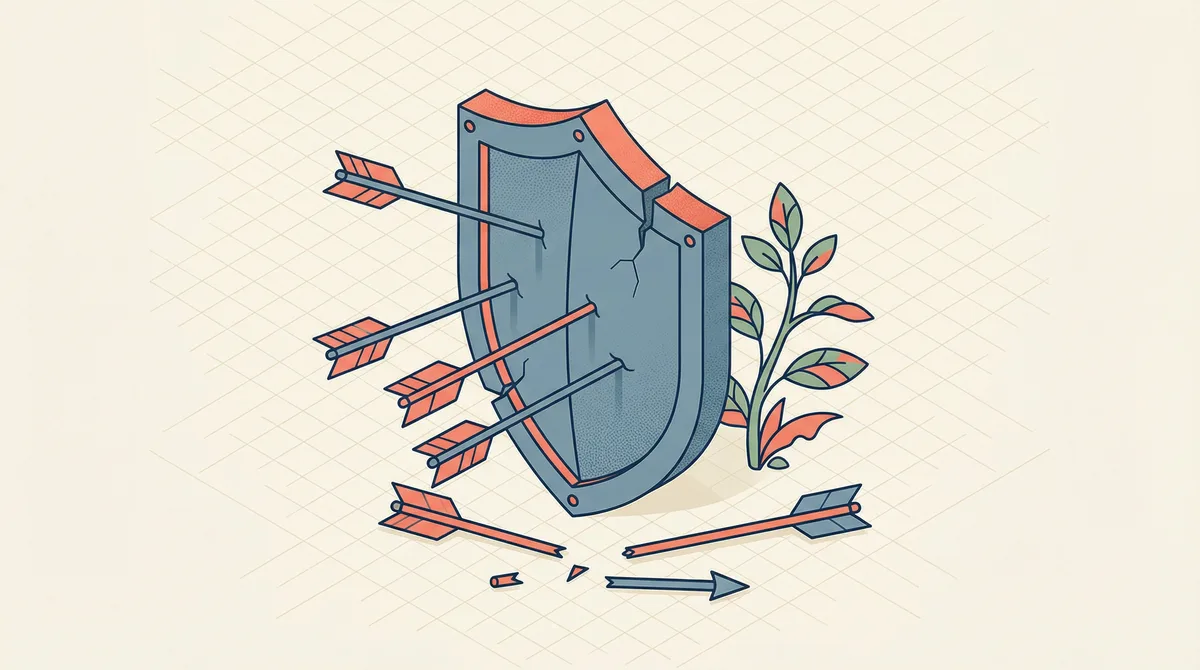
On February 24, 2026, the Pentagon gave Anthropic an ultimatum. Drop your restrictions on mass surveillance and autonomous weapons, or lose all U.S. government contracts. Anthropic refused. The Trump administration ordered all federal agencies to stop using Anthropic products. The Pentagon designated the company a national security risk.
Days later, OpenAI’s Sam Altman announced a Pentagon deal of their own.
The timing made it look like OpenAI had been waiting for Anthropic to say no so they could say yes. The optics were devastating. ChatGPT uninstalls surged 295% on February 28, according to Sensor Tower. One-star reviews surged 775% day-over-day. Many OpenAI employees signed an open letter supporting Anthropic’s refusal. Robotics head Caitlin Kalinowski resigned on March 7, citing ethical concerns about the deal.
Altman himself later acknowledged the damage: “We were genuinely trying to de-escalate things and avoid a much worse outcome, but I think it just looked opportunistic and sloppy.”
Dario Amodei was less diplomatic. He called OpenAI’s Pentagon messaging “straight up lies” and characterized their deal as “safety theater.”
The Brand Math
The numbers that followed tell you everything. Claude climbed from #131 to #1 on Apple’s U.S. top free apps chart. Daily downloads surpassed ChatGPT for the first time. Claude’s U.S. market share roughly tripled from 1.5% to 4% in February 2026, according to Digiday and Apptopia.
Brand sentiment data from Pulsar made the shift concrete. Anthropic’s positivity score rose to 63.9 out of 100 after the refusal. OpenAI’s dropped to 49.3 out of 100. A swing of nearly 14.6 points. Claude’s churn rate dropped from 55% to 36%, the largest improvement among competitors.
This came weeks after Anthropic’s Super Bowl LX campaign had already warmed up the brand. Their ad, built around the tagline “Ads are coming to AI. But not to Claude,” pushed Claude from #41 to #7 on the App Store with an 11% jump in daily active users. The Pentagon moment amplified that momentum.
None of this was planned. Anthropic did not stage a confrontation with the Department of Defense as a marketing strategy. But the sequence of events created a narrative that money cannot manufacture: the company that refused the Pentagon contract was also the company building the best coding AI and the fastest-growing enterprise platform. For enterprise procurement teams evaluating AI vendors, “the company the Pentagon tried to bully and couldn’t” became a trust signal that no benchmark could provide.
The Mythos Leak
Then, on March 26-27, 2026, a configuration error in Anthropic’s content management system made roughly 3,000 unpublished assets publicly accessible. Among them was a draft blog post about a new model called Claude Mythos, internal codename Capybara.
Anthropic confirmed the model, calling it “a step change” in capabilities and “the most capable we’ve built to date.”
This matters because Capybara represents a new fourth tier above Opus. The first time Anthropic has ever added a tier at the top of their hierarchy. According to Anthropic’s own internal assessment (and to be clear, no independent third-party evaluation exists), the leaked draft describes the model as “currently far ahead of any other AI model in cyber capabilities” with “dramatically higher scores” in coding, reasoning, and cybersecurity.
Multiple outlets noted the irony. Anthropic’s draft warned about cybersecurity risks while the leak itself was caused by a basic CMS misconfiguration. Fair point.
But for the broader narrative, the leak did something specific: it reinforced the perception that Anthropic is not just winning today. They have something bigger in testing. Whether Mythos delivers on those internal claims remains to be seen. But combined with the Pentagon brand moment, it gave Anthropic a story arc that no competitor could match: principled, technically superior, and accelerating.
In the span of five weeks, Anthropic got a Super Bowl ad, a principled government standoff, a viral brand moment, and a leaked next-generation model. No marketing team in the world could have orchestrated that sequence. But because the flywheel was already spinning, each event amplified the next.
Where This Could Go Wrong
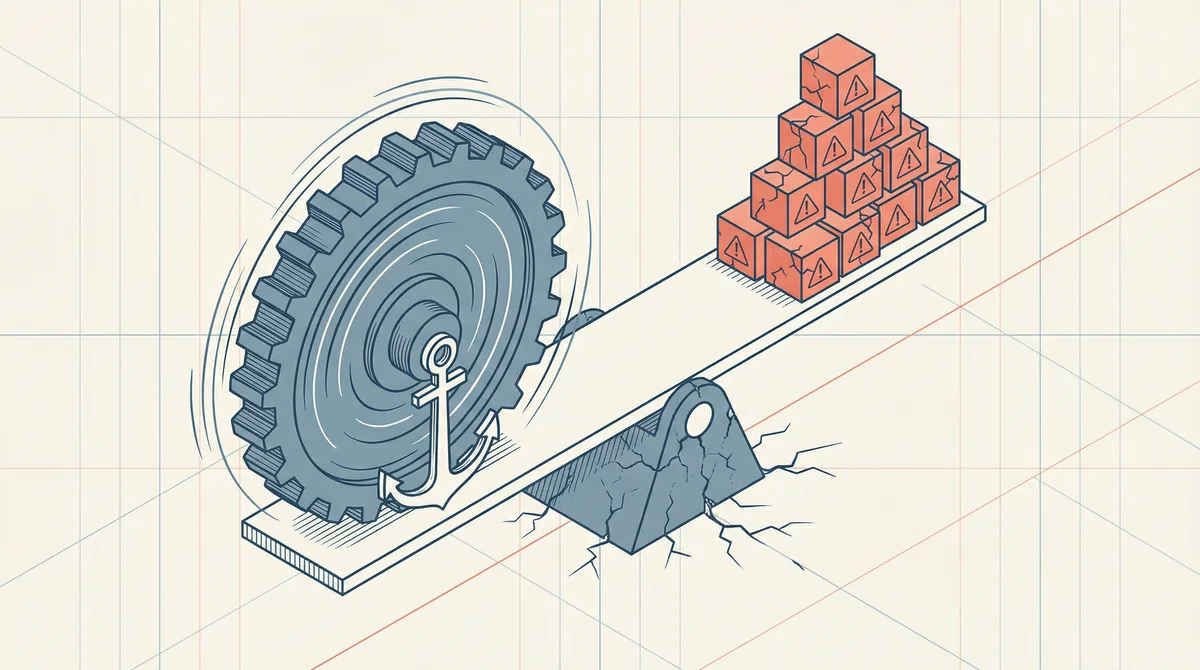
Before declaring that the flywheel is unstoppable, it is worth being honest about what could slow it down. Anthropic’s position is strong, but it is not unassailable.
ChatGPT’s Consumer Moat
As of February 2026, ChatGPT still has 800 million weekly active users. It holds 60.4% of the consumer chatbot market, 92% of Fortune 500 companies use it, and it has 3 million paying business users.
Consumer habits are sticky. Brand recognition matters. Most non-technical users still say “ChatGPT” when they mean “AI,” the same way people say “Google” when they mean “search.” As of March 2026, Anthropic’s consumer market share sits at 4.5%. The enterprise story is compelling. The consumer story is still developing.
Google’s Infrastructure Advantage
As of March 2026, Google designs its own TPUs (v7 pods capable of 42.5 exaflops), giving them structural control over training and inference costs that neither Anthropic nor OpenAI can match. Gemini reaches 750 million users through distribution across Search, Android, Workspace, and the Apple Siri partnership. Gemini API calls grew from 35 billion to 85 billion between March and August 2025. Google is underperforming relative to its resources, but it is not failing.
As of March 2026, Gemini 3.1 Pro leads on GPQA Diamond (94.3%) and ARC-AGI-2 (77.1%), two of the hardest reasoning benchmarks. Google’s problem has never been capability. It is coordination.
Benchmark Convergence
Here is the uncomfortable truth for everyone claiming any single model is “the best.” As of March 2026, no single model dominates all tasks. The top models land within 1-2 points of each other on most benchmarks. Opus 4.6 leads LMArena human preference by only 4 Elo points over Gemini 3.1 Pro, which is effectively noise. GPT-5.4 (released March 13) leads Terminal-Bench 2.0 (75.1% vs 65.4%) and SWE-bench Pro (57.7% vs roughly 45.9%).
As of March 2026, the “best model” crown changes monthly. Any technical lead is narrow and contested.
The Pricing Gap and Usage Limits
Consistent user complaints about rate limiting and server instability have followed every surge in Claude usage. As of March 2026, the pricing cliff between $20/month (Pro) and $100/month (Max) frustrates power users who outgrow Pro but cannot justify Max. This is a real retention risk in a market where competitors are aggressively undercutting on price.
The RSP Controversy
This is the most significant risk to Anthropic’s brand differentiation. On February 24, 2026, the same day as the Pentagon ultimatum, Anthropic quietly dropped its flagship safety pledge: the commitment to pause training if capabilities outstrip safety measures.
Weeks earlier, on February 9, Mrinank Sharma, head of Anthropic’s Safeguards Research Team, had resigned with a public warning: “Throughout my time at Anthropic I have repeatedly seen how hard it is to truly let our values govern our actions.”
The nuance matters here. Anthropic has proved that Constitutional AI can make models both safer and more capable simultaneously. Opus 4.5 achieved a 99.78% harmless response rate while being the performance leader. The technology works. The question is whether the institutional commitments will hold under commercial and political pressure.
If the safety narrative collapses, the trust advantage that powered the Pentagon brand moment collapses with it. The flywheel does not just run on technology and revenue. It runs on the belief that Anthropic is different. That belief is now under real strain.
Financial Reality
Both Anthropic and OpenAI are burning capital at extraordinary rates. Anthropic has raised $50 billion+ in total funding and projects positive cash flow by 2027, but current training runs cost $1-10 billion each, with 2026 runs potentially exceeding $10 billion per model. OpenAI projects $115 billion in cumulative cash burn through 2029.
The deceleration from 10x to 4x growth noted earlier is real. The Epoch AI revenue crossover with OpenAI is projected, not guaranteed.
There is also a structural vulnerability worth noting: Anthropic’s compute runs on AWS, Google Cloud, and Azure. Their infrastructure sits on someone else’s foundation. If any of those cloud providers decided to compete more aggressively or change terms, Anthropic would feel it.
These risks are real, and any one of them could change the trajectory. The flywheel thesis depends on every layer reinforcing every other layer. If the safety narrative fractures, or if benchmark convergence makes the model layer commoditized, or if growth decelerates faster than projected, the whole argument changes. Nothing about this is guaranteed.
Conclusion
Return to where we started. In March 2026, Fidji Simo told her team at OpenAI they could not afford “side quests” anymore. When the CEO of Applications at the company with 800 million users says that, you should pay attention to the company she is worried about.
Anthropic built three layers that reinforce each other.
The model layer. Narrow leads on the metrics paying customers care about most: human preference, coding satisfaction, writing quality. And a “step change” model in testing that could widen those leads.
The platform layer. MCP as the industry standard. 75+ connectors. A zero-commission Marketplace. A Partner Network backed by $100 million. Microsoft integration inside the world’s dominant enterprise suite. And a vertically integrated infrastructure play being built underneath.
The momentum layer. $1 billion to $19 billion ARR in 15 months. A 70% head-to-head enterprise win rate. The fastest-growing consumer market share in AI. And a brand trust advantage that money cannot buy.
Anthropic has not won the AI race. The risks outlined above are genuine. But Anthropic has assembled something none of its competitors have: a coherent flywheel where every piece reinforces every other piece. The coding AI builds the products. The products build the ecosystem. The ecosystem drives the revenue. The revenue funds the models. And the brand trust holds it all together.
Full disclosure: I use Claude Code daily. That makes me both better-informed and more biased than the average observer. This article is a directional argument, not a settled verdict. The data is real and the trends are genuine, but this is a snapshot taken at a moment that heavily favors Anthropic. If OpenAI’s consolidation under Simo works, or if Google finally coordinates its AI efforts, this piece could age poorly.
But right now, most consumers still think of the AI race as ChatGPT vs. Gemini. By the time they notice Anthropic, the gap may already be hard to close.